
Ketamine-Assisted Psychotherapy in Livingston, Montana
Ketamine-assisted psychotherapy (KAP) pairs a prescribed, medically screened dose of ketamine with guided therapy before, during, and after the medicine session. At Eden Mental Health and Wellness, Sam Mascari, PCLC, offers KAP in a private setting just outside Livingston, Montana, for adults from Park County, Bozeman, and the Gallatin Valley who feel stuck with depression, anxiety, or trauma.


Feeling Stuck Even Though You’ve Done the Work?
Maybe you’ve tried therapy, medication, or both, and something still won’t shift. The same heaviness returns. The same patterns run on autopilot. You understand your story, but your body and nervous system haven’t caught up. Ketamine-assisted therapy can open a window of flexibility: a few hours when the mind loosens its grip on familiar patterns, so the work you do in therapy has room to land. The ketamine creates the opening. Lasting change comes from what you do with it, in session with your therapist and in the days that follow.
What Is Ketamine-Assisted Psychotherapy (KAP)?
Ketamine is a medication the FDA approved as an anesthetic in 1970. At much lower, sub-anesthetic doses, it has been studied for its rapid effects on depression, and licensed prescribers now use it off-label, legally and by prescription, to support psychotherapy for depression, anxiety, trauma, and existential distress.In KAP, ketamine is never the whole treatment. It is paired with psychotherapy at every stage: preparation sessions to set intentions and build safety, a medicine session with your therapist present the entire time, and integration sessions afterward to turn insight into change. That is the key difference from an infusion clinic, where the medication itself is the focus.Ketamine is also short-acting. Its strongest effects usually ease within an hour or two, so a full KAP session, including time to come back and talk, fits within a single afternoon rather than an all-day experience.
How does ketamine help in therapy?
Ketamine works differently from typical antidepressants. It acts on the brain’s glutamate system by blocking NMDA receptors, and research suggests it promotes neuroplasticity, the brain’s capacity to form new connections. Many people describe the experience as a temporary softening. Defenses relax, painful material feels less overwhelming, and new perspectives become easier to reach. In KAP, that window is used on purpose, with a therapist who knows your story and your goals.
A trauma-informed, whole-body approach
KAP at Eden Mental Health and Wellness is grounded in the same trauma-informed, nervous-system-aware care as the rest of our practice. Sam weaves relational therapy, somatic awareness, and mindfulness into each phase, so the work doesn’t stay only in your head. People already drawn to somatic therapy, IFS and inner-child work, or EMDR often find KAP a natural complement.
What Can Ketamine-Assisted Therapy Help With?
KAP may help adults who are working through:
Depression, including depression that hasn’t responded to medication or talk therapy
Anxiety and chronic worry
Trauma and PTSD, including developmental and complex trauma
Grief, major life transitions, and existential distress
Feeling numb, stuck, or disconnected, even after years of therapy
Repeating patterns you understand but can’t seem to change
KAP is not right for everyone, and it is not a crisis treatment.
Your free consultation is where we figure out together whether it fits.
What Is a Ketamine-Assisted Therapy Session Like?
Every session is different. With your therapist beside you, the medicine usually brings a relaxed, dreamlike state. Some people feel a gentle distance from their body or usual thoughts; many notice vivid imagery, emotional release, or a sense of connection to something larger than themselves. Your therapist helps you meet whatever arises with curiosity rather than judgment.
People often describe:A fresh perspective on a long-standing problem
Relief from rigid, looping thoughts
More self-compassion and emotional openness
Insight into where a pattern began
A renewed sense of meaning and connection
Side effects are usually brief and can include nausea, dizziness, and a temporary rise in blood pressure. You’ll rest until the effects have fully worn off, and you’ll need someone to drive you home. Plan not to drive for the rest of the day.
KAP is a supported process, not a single appointment.
It moves through four steps:
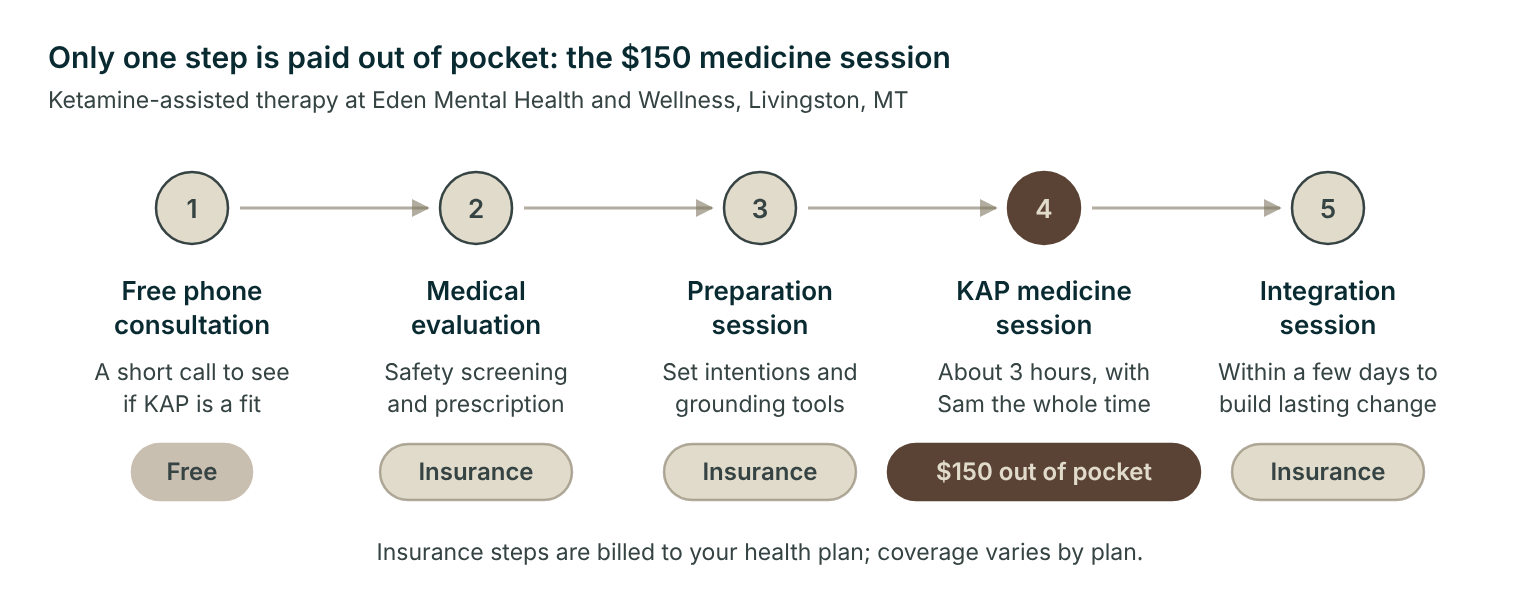
1. Free consultation: A short phone call to talk through what you’re hoping for, answer your questions, and see whether KAP is a good fit. There’s no cost and no commitment.
2. Medical screening and preparation: If you decide to move forward, you’ll meet with a partnering nurse practitioner for a medical evaluation. That visit determines whether ketamine is safe for you and, if so, provides the prescription. You’ll also have a preparation session with Sam to clarify your intentions, practice grounding tools, and build the trust that makes the medicine session feel safe. Preparation sessions are typically billable to insurance.
3. The KAP medicine session (about 2-3 hours): Your medicine session takes place in a private therapy cabin on the prairie just outside Livingston: quiet, comfortable, and surrounded by open Montana landscape. Sam stays with you the entire time. Plan for about three hours, and arrange a ride home.
4. Integration: Within a few days, you’ll meet again to explore what came up and translate it into real changes in your relationships, habits, and sense of self. Integration sessions are typically billable to insurance. Many people complete more than one KAP session over several weeks; you and Sam will decide on pacing together.
Cost and Insurance for KAP in Livingston
Is Ketamine-Assisted Therapy Safe?
Ketamine has more than 50 years of medical use and is generally well tolerated in a supervised setting, but it isn’t right for everyone. That’s why every client completes a medical evaluation with a prescriber before any medicine session. KAP may not be a fit, or may need extra medical clearance, if you:
Have uncontrolled high blood pressure or certain heart conditions
Have a personal history of psychosis, or are in a manic episode
Are pregnant
Are currently misusing ketamine, alcohol, or other substances
Have had a bad reaction to ketamine before
Your prescriber and therapist will review your health history, medications, and goals with you and recommend the safest path. Sometimes that means starting with another kind of therapy first.
If you’re in crisis or thinking about suicide, call or text 988, or go to the nearest emergency room. KAP is not an emergency service.
What Does the Research Say About KAP?
Ketamine is one of the most studied rapid-acting treatments in modern psychiatry. A 2019 study of three private practices using ketamine with psychotherapy found significant decreases in depression and anxiety, with the largest gains among people with the most severe symptoms. The same research linked more KAP sessions with greater improvement.
A 2023 retrospective study of several hundred KAP clients reported reductions in depression, anxiety, and PTSD symptoms that held at three and six months after treatment.
KAP research is still growing, and results vary from person to person. We’ll be honest with you about what’s known, what isn’t, and whether KAP makes sense for your situation.
Ketamine-Assisted Therapy Near Bozeman, Big Sky, and Paradise Valley
Our Livingston office is at 103 S. Main St., Suite 11, Livingston, MT 59047, about 30 minutes from Bozeman over the pass. KAP medicine sessions take place in a private cabin just outside town, and you’ll receive directions after your intake.
We see KAP clients from:
Livingston and Park County
Bozeman, Belgrade, and the Gallatin Valley
Big Sky
Paradise Valley, Emigrant, and Gardiner
Clyde Park, Wilsall, and the Shields Valley
Big Timber
And people travel from all over Montana!
Looking for other in-person care? Visit our Livingston therapy office or learn about equine-assisted therapy in Livingston.
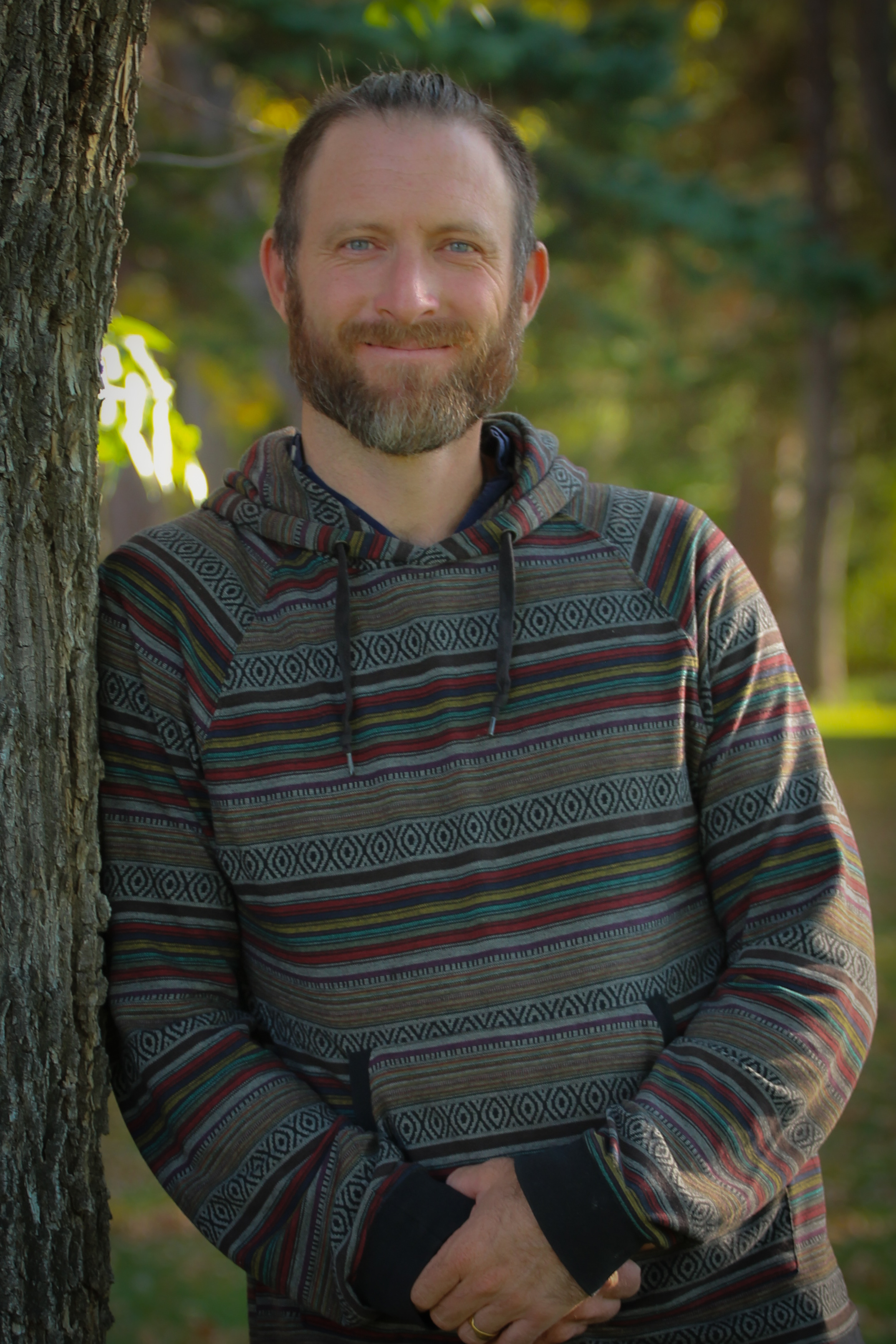
Meet Your KAP Therapist: Sam Mascari, PCLC
Sam grew up in Montana, shaped by its creeks, rivers, and mountains, and nature still guides how Sam understands healing and belonging. Before becoming a therapist, Sam worked in wilderness therapy with at-risk teens, founded a nonprofit centered on youth empowerment, organic agriculture, and connection to the land, and has led men’s groups for the past decade.
Sam earned a master’s degree in mental health counseling and now brings together relational therapy, somatic awareness, mindfulness, and trauma-informed care, adding ketamine-assisted therapy when it’s a good fit. Sam’s work rests on a simple belief: each person carries an inner capacity to heal, and that healing happens in relationship.
Frequently Asked Questions

Is ketamine-assisted therapy legal in Montana?
Yes. Ketamine has been FDA-approved since 1970 and is a Schedule III controlled substance. Using it at lower doses to support mental health treatment is a legal off-label use when a licensed prescriber orders it after a medical evaluation.
How is KAP different from a ketamine infusion clinic?
Infusion clinics focus on the medication, usually given by IV with little or no therapy. In KAP, therapy is the core: you prepare with your therapist, your therapist stays with you during the medicine session, and you integrate the experience together afterward.
Does insurance cover ketamine-assisted therapy?
The medical evaluation, preparation, and integration sessions are typically billable to insurance. The medicine session, about 2 to 3 hours, is $150 and paid out of pocket. KAP is not available through Montana Medicaid. We will check your benefits during your free consultation.
How many KAP sessions will I need?
It varies. Many people complete a series of several medicine sessions over a few months, each followed by integration. Research links more sessions with greater improvement, but you and your therapist will decide on pacing based on your goals and how you respond.
Will I be unconscious or lose control during KAP?
No. KAP uses doses far below those used for anesthesia. You stay awake and able to communicate, though you may feel relaxed, dreamlike, or distant from your usual thoughts. Your therapist is with you the entire time.
Can I do KAP if I take antidepressants or other medications?
Often, yes. Many people continue their current medications. Some, such as benzodiazepines, can change how ketamine works, so your prescriber will review everything you take. Never stop or change a medication without talking to your prescriber first.
Do I have to live in Livingston to do KAP?
No. Clients come from Bozeman, Big Sky, Paradise Valley, Gardiner, and across Park and Gallatin counties. The medicine session happens in person just outside Livingston, about 30 minutes from Bozeman.
Who provides ketamine-assisted therapy at Eden Mental Health and Wellness?
Sam Mascari, PCLC, provides the therapy and practices under clinical supervision. A partnering nurse practitioner handles the medical evaluation and prescription.
Heal your heart and restore your wellness.
Book your free consultation today | 406-602-2977